Prediction Markets vs. Investing: What’s the Financial Difference?
Learn the financial difference between prediction markets and investing, including ownership, risk, returns, pricing, and time horizon.
Disclaimer: This article is for general informational and educational purposes only and does not constitute financial, investment, trading, legal, tax, gambling, or regulatory advice. Both investing and prediction-market trading involve risk, including the possible loss of money. Readers should review all platform rules and consider speaking with a qualified financial or legal professional before participating.
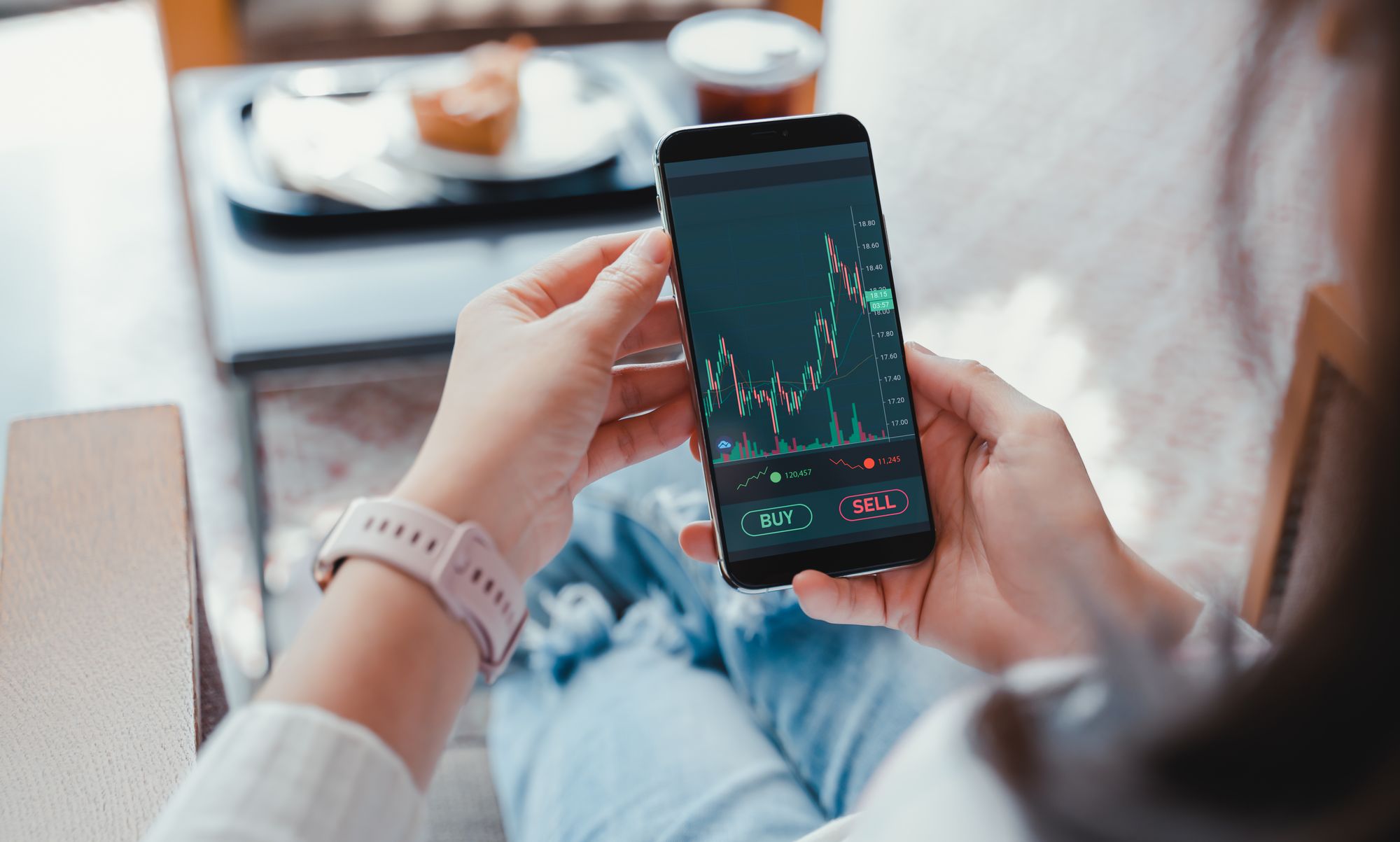
Prediction markets and investing can look surprisingly similar on a phone. Both involve putting money at risk, watching prices move, and making decisions based on what you think will happen next. Financially, however, they work in very different ways.
The distinction has become more important as prediction markets have grown. In June 2026, the CFTC proposed amendments to rules concerning event-contract derivatives, including how certain contracts may be assessed on public-interest grounds. The CFTC describes event contracts as derivatives whose value depends on the outcome of an underlying event.
Traditional investing starts from a different premise. Investor.gov defines investing as putting money into assets such as stocks or bonds with the expectation of earning a return over time through appreciation, interest, or dividends.
The easiest way to understand the difference is to ask three questions: What are you buying? Where can the return come from? And what eventually happens to the position?
Comparison Sites And First Checks
Choosing a prediction market requires a different type of research from choosing a long-term investment. Comparisons of the best prediction markets can help users evaluate platforms such as Kalshi and Polymarket across factors including market coverage, liquidity, fees, app experience, security, and availability. Those comparisons are useful starting points, particularly for someone encountering event contracts for the first time.
They should not be the only check. Users should also understand the rules of the individual contract, how settlement is determined, what fees apply, whether they can exit before settlement, and whether the platform and specific market are available in their location.
The CFTC says event contracts can hedge economic risk or speculate on event outcomes. Its consumer explainer describes these contracts as derivatives whose value comes from an underlying event. In simpler terms, a user buys a position on whether something will happen. If the event resolves in the user’s favor, the contract pays according to its rules. If the event resolves the other way, the position can lose value. The contract doesn't give ownership of a business.
Ownership Versus Outcome
A stock gives the holder a share of ownership in a company. The SEC’s stocks guide says investors may buy stocks for capital appreciation, dividends, or voting rights. A bond works differently because the investor lends money to an issuer for a set period, according to Investor.gov’s bond glossary. Those instruments connect to enterprises, governments, income streams, and balance sheets.
An event contract connects to a defined result. A trader may take a position on an economic release, an election, or a sports outcome where available under the venue’s rules. The financial life of that contract ends when the event settles. The price before settlement may reflect changing information, but the contract does not build ownership. That difference explains why long-term investors talk about portfolios, while event traders focus on probabilities and resolution dates.
Time horizon creates another major difference. Traditional investing is often built around years or decades. Someone saving for retirement, education, or another long-term goal may continue holding assets through multiple economic and market cycles. Returns can accumulate through appreciation, interest, dividends, or reinvestment.
Event contracts operate around a defined question and usually a defined resolution point. Some may settle quickly, while others remain open for months or longer. Either way, the event eventually produces an outcome under the contract's settlement rules.
That shorter and more defined timeline changes the way risk is evaluated. A long-term investor may ask what a company could be worth several years from now. A prediction-market trader is more likely to ask whether the market has correctly priced the probability of a particular event before it occurs.
How Prediction Market Pricing Works
Prediction-market prices often provide a quick way to see what traders collectively think about an outcome. A contract priced at 60 cents, for example, can roughly resemble a market-implied 60% probability. That does not mean the outcome has a scientifically proven 60% chance of occurring. The price reflects what buyers and sellers are currently willing to pay.
Prices can move before the event settles. New information, changing expectations, trading volume, and liquidity can all affect the market. Depending on the platform and contract, a trader may also be able to sell a position before the final result rather than holding it until settlement.
That creates another difference from traditional investing. The value of a stock can change because investors reassess a company's earnings, growth prospects, interest rates, or broader economic conditions. The value of an event contract moves primarily because traders reassess the likelihood of a specific outcome.
Fees and liquidity matter as well. A market can appear attractive at first glance but become harder or more expensive to trade if there are few buyers and sellers or a wide gap between available buy and sell prices. Looking only at the headline contract price can therefore give an incomplete picture of the actual risk and potential return.
| Feature | Prediction Market | Traditional Investing |
|---|---|---|
| What you buy | Contract tied to an event | Asset such as a stock or bond |
| Source of return | Correctly pricing an event outcome | Appreciation, dividends or interest |
| Ownership | Usually none in the underlying subject | Stocks represent equity ownership |
| Time horizon | Often ends when an event settles | Can be held indefinitely or for many years |
| Main price driver | Changing expectations about an event | Company, economic and market factors |
| Diversification | Possible across contracts, but each contract has a defined outcome | Commonly spread across companies, sectors and asset classes |
| Exit | May be sold before settlement where the market permits | Assets can generally be sold while markets are available |
Risk Works Differently
Both investing and prediction-market trading involve the possibility of losing money, but the sources of that risk are different.
Long-term investors often manage risk through diversification. Instead of relying on one company or one asset class, they may spread capital across stocks, bonds, cash, sectors, or markets. Diversification cannot prevent losses, but it can reduce the damage caused by one investment performing badly.
Event contracts create more outcome-specific risk. The value of an individual position depends heavily on what happens with the event described in the contract and how other traders price that possibility before settlement.
A trader can diversify across different prediction contracts, but that is not equivalent to owning a diversified portfolio of productive or income-generating assets. Each contract still has its own event, pricing, liquidity, and settlement risk.
There is also execution risk to consider. A trader who wants to exit before settlement may find that the available price has moved sharply or that liquidity is limited. That makes market depth, spreads, fees, and settlement rules important parts of the risk calculation, not just whether the prediction itself turns out to be correct.
Not Everything That Makes Money Is an Investment
The word "investment" is often used loosely whenever money and potential profit are involved. That can create confusion.
Consider AI side hustles. Someone might spend money on software, advertising, training, or other tools in the hope of earning additional income. That does not automatically make the activity a financial investment in the traditional sense. The return may depend primarily on the person's work, customers, and ability to run the project successfully.
Prediction markets deserve the same distinction. Putting money into an event contract does not make it equivalent to buying stocks or bonds simply because both involve capital and the possibility of profit.
A useful question is therefore not just, "Can this make money?" It is, "What exactly am I buying, where could the return come from, and what risks determine whether I get my money back?"
The Bottom Line
Prediction markets and investing both involve putting money at risk based on expectations about the future, but that similarity only goes so far.
Traditional investing generally involves owning an asset or lending capital with the expectation that value, income, or both may develop over time. Prediction-market trading involves taking a position on a defined event whose contract eventually settles according to a specific result.
Neither is automatically safe simply because it appears inside a financial-looking app. Before committing money, the important questions remain the same: understand what you are buying, how the price is formed, what fees apply, how you can exit, what determines settlement, and how much you can afford to lose.
For long-term financial goals, prediction contracts and diversified investments should therefore be viewed as fundamentally different tools rather than interchangeable ways of putting money to work.
FAQs
What do you buy on a prediction market?
You buy a contract tied to a future event. The CFTC describes event contracts as derivatives whose value comes from an outcome, such as an economic result or another defined event. You don’t buy part of a company when you trade one of these contracts. You buy a position on whether the event resolves a certain way.
How does that differ from buying stocks?
A stock gives the holder ownership in a company. Stockholders may receive gains through price growth or dividends. A prediction contract ends when its stated event settles. The stock can remain in a portfolio for years. The contract has a finish point built into the trade.
Do prediction-market prices represent probability?
They can be interpreted as a market-implied probability, but they should not be treated as a guaranteed forecast. A contract trading around 60 cents may suggest that traders collectively price the outcome at roughly 60%, but prices can also be affected by liquidity, trading activity, new information, and market sentiment.
Can you sell a prediction contract before the event happens?
Often, yes. Depending on the platform and the contract, traders may be able to close or reduce a position before the event settles. The price available at that point depends on current market conditions and liquidity, so selling early can produce either a profit or a loss.
Are prediction markets a substitute for long-term investing?
No. Prediction markets and long-term investing serve different purposes. Event contracts are built around defined future outcomes, while long-term investment portfolios may be designed to build wealth or generate income over many years. Prediction contracts should not be treated as a replacement for emergency savings, retirement planning, or a diversified investment strategy.
Why do prediction markets attract sports fans?
Sports fans already follow changing information. Injury reports move prices. Weather can affect outcomes. A coach’s decision can change how a market behaves. Prediction markets use a trading structure, but the habits around timing and news feel familiar to people who follow sport closely.
Can you lose all the money in a prediction contract?
Yes. If the contract resolves against your position, the trade can lose its value. Some contracts may also move against you before settlement. A user should treat the stake as money at risk, not as part of an emergency fund or retirement plan.